2026-11-16
When parent and child both have ADHD: routines that do not live in one person's head
Shared family routines for ADHD households: fewer reminders, clearer handovers, and practical systems that reduce the memory load on one parent.
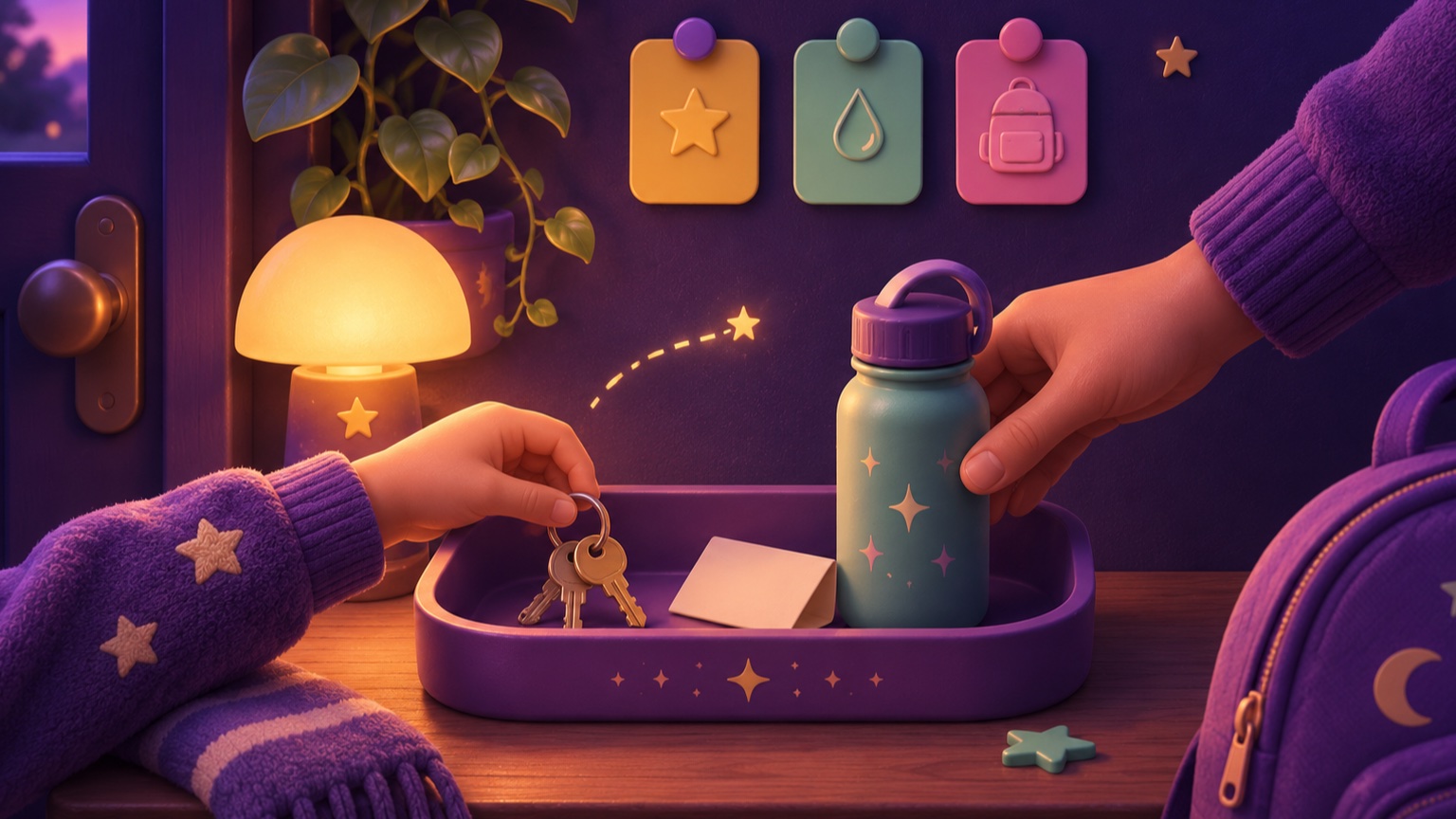
Many family routines depend on one adult noticing everything: the time, the missing shoe, the form that needs signing, the homework due tomorrow, the water bottle still on the kitchen counter, and the moment a child has stopped moving.
That load is heavy for any parent. It can be especially difficult when the parent and child both live with ADHD, or when both find time, working memory, task starts, and too many decisions hard to manage.
A household can place more of its memory in the space around it.
Find the handover that keeps failing
Start with one recurring moment: leaving for school, packing for swimming, starting homework, getting out of the bath, or preparing for bed.
Describe the sequence without blame.
For example:
- The school bag stays in the bedroom.
- The permission slip stays inside the bag.
- The parent remembers it at the door.
- Everyone becomes rushed.
That story points to a system problem. The bag has no reliable landing spot, and the paper has no visible place to wait for a signature.
Choose one change that helps the next handover happen with less remembering.
Give important things a visible home
A "launch spot" near the door can hold the things that create the most last-minute searches: bags, keys, coats, water bottles, sports kit, headphones, and school papers.
It can be a basket, a row of hooks, a shelf, or a tray. It needs to be easy to use on a tired Tuesday morning.
You can add a short check card beside it:
- bag
- water
- coat
- shoes
Keep the list small enough to notice. A large board full of every household job soon becomes part of the wallpaper.
Put the plan where both people can see it
Routines work better when the plan is not delivered only through reminders.
Try a shared support that suits your home:
- a weekly calendar on the fridge
- one whiteboard line for tomorrow's unusual event
- a paper list near the door
- a basket for forms that need action
- a labelled alarm for a real event
- a card for the first step of a routine
The best format is the one that gets looked at. A paper note can be more useful than a carefully designed system that needs an app, a login, and a quiet hour to maintain.
Start together when the routine has stalled
Some mornings, the adult is stuck too. Give both people an easier entry point into the routine.
Try a shared first action:
- "Let us both put our bags by the door."
- "I will fill the bottles while you find the shoes."
- "We are opening the calendar together."
- "I am putting my keys in the tray. You can put your headphones beside them."
The adult still holds responsibility for the day. The language makes room for partnership instead of turning every task into a reminder from one person to another.
Make time noticeable without making it frightening
Time cues can help a household move through a routine. They can also create panic, especially after a difficult start.
Use a cue only when it helps:
- one song while getting dressed
- an alarm called "shoes" rather than only showing a time
- breakfast before the bag check
- a reminder after dinner to put sports kit by the door
If a timer creates arguments or anxiety, change the cue. A routine can run on events, objects, and repetition as well as clock time.
Talk about the setup, not anyone's character
Children notice the words adults use about forgetfulness. So do adults.
Instead of "You always forget your things," try:
- "The bottle did not make it to the launch spot."
- "The reminder was too easy to miss."
- "The paper needs a place where we will both see it."
- "Let us make tomorrow easier to find."
These phrases leave room for responsibility and for changing the practical conditions that support it.
Build one support, then live with it
Do not redesign the whole household at once. Choose the friction point that costs the most energy and add one visible support for it. Keep it for a week, then ask whether it helped people find the next step.
Use a system that carries a little of the remembering so family life places less pressure on one person to hold every moving part in their head.